
Lahza: How Strike Media Built a Real Estate Campaign That Started With a Song
What does it mean to sell a home before a single billboard is printed? Not a unit, not a floor plan, not a price per metre — a home, in the fullest sense of the word. It is a question the Egyptian real estate industry rarely pauses to ask. The dominant grammar of property marketing in Egypt is a familiar one: sweeping aerials of unbuilt land, rendered lobbies lit in warm amber, voiceovers that invoke “lifestyle” without quite defining it. The category has its conventions, and developers, understandably, tend to stay within them. But conventions are not resonance. And resonance, as it turns out, is exactly what Reflect Developments needed.
What followed was a campaign unlike anything the Egyptian residential market had seen — a fully integrated creative undertaking that moved through song, screen, and stage to give a new compound not just a launch, but a cultural identity. It began with a brief. It ended, for now, with one of the most discussed compound launches in Egypt in 2026. The distance between those two points is the story worth telling.
The Brief
Reflect Developments came to Strike Media with a residential project called Moment Community (مومنت كوميونيتي) — a new compound set across Obour and New Obour, east of Cairo. The brand promise was both simple and ambitious: لحظات بتجمعنا, or “moments that bring us together.” It is the kind of line that can read either as genuine philosophy or as hollow sentiment, depending entirely on how it is executed. The danger for any developer with a human-scaled positioning is that the marketing machinery defaults to the same architectural vocabulary as everyone else — and the line becomes just a line.
The challenge Strike Media was handed was not primarily a media-buying challenge, nor even a design challenge. It was a cultural one. How do you give a residential project an emotional identity that precedes the construction hoarding, that exists before the sales centre opens, that gives people a feeling about a place before they have ever visited it? The agency’s answer was deceptively direct: you commission a song.
The Insight
Music occupies a particular position in Egyptian and broader Arab cultural life. A song is not an advertisement in the way a billboard is an advertisement — it does not ask to be noticed. It enters the room differently, sits in the memory differently, and carries emotional freight that the most sophisticated visual campaign rarely matches. Strike Media had explored this territory before, having produced the SELEKT compound launch for Reflect Developments — a campaign headlined by Hamaki (حماقي) that established both the agency’s capability and the client’s appetite for creative ambition. SELEKT had demonstrated that a real estate launch could feel like a cultural event. Moment Community would take that logic further still.
The insight was not simply “use a celebrity.” That approach exists throughout Egyptian advertising, and its results are predictably mixed — a famous face pasted onto an unfamiliar project rarely produces genuine resonance. The insight was more precise: commission a bespoke song, built from scratch for this project, with an artist whose voice carried the emotional register the brand promise required. The song would not be a jingle. It would be a fully produced track — something that could live on streaming platforms, be heard on radio, travel through social networks — and it would do the brand’s emotional work before any other marketing asset existed. Moment Community would have a cultural footprint before it had a single hoarding on the Cairo Ring Road.
The Artist
The selection of Wael Jassar (وائل جسار) was not a booking decision — it was a creative one. Jassar is among the most recognisable voices in contemporary Arab music: a Lebanese artist with a pan-Arab following, a career built on songs that centre warmth, longing, and belonging. These are not incidental qualities. For a campaign whose emotional core is the idea of moments shared between people, Jassar’s vocal sensibility offered something specific — not the melancholy of distance, but the fullness of presence. His voice carries the feeling of people in the same room.
The production team was assembled with the same intentionality. Lyricist Muhammad Nassar (محمد نصار) was commissioned to write the song — titled لحظة, “Lahza,” meaning “Moment” — with the brief to make the lyric feel lived-in rather than written. The music and arrangement were handled by Madin (مدين), with additional arrangement from Akram Adel (أكرم عادل), building a sonic landscape that could carry the emotional weight the campaign demanded without tipping into sentimentality. The result was a track that works as a standalone piece of music — which was precisely the point. If the song only worked as a real estate advertisement, it had already failed half its purpose.

The Production Challenge
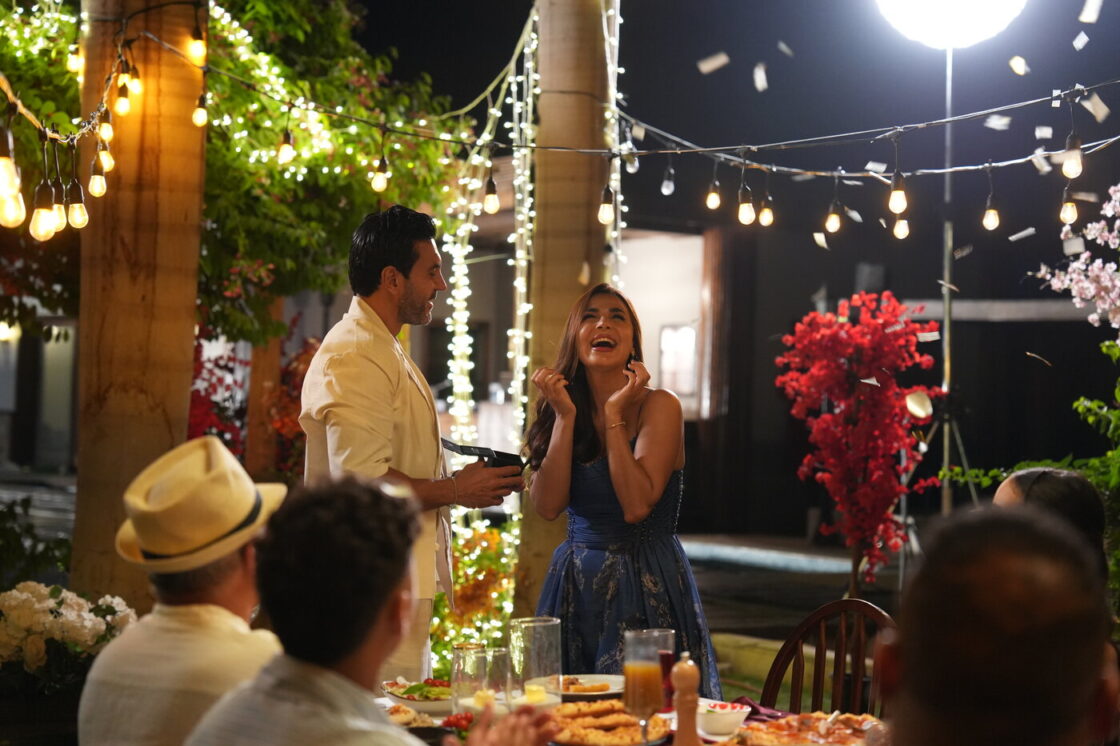
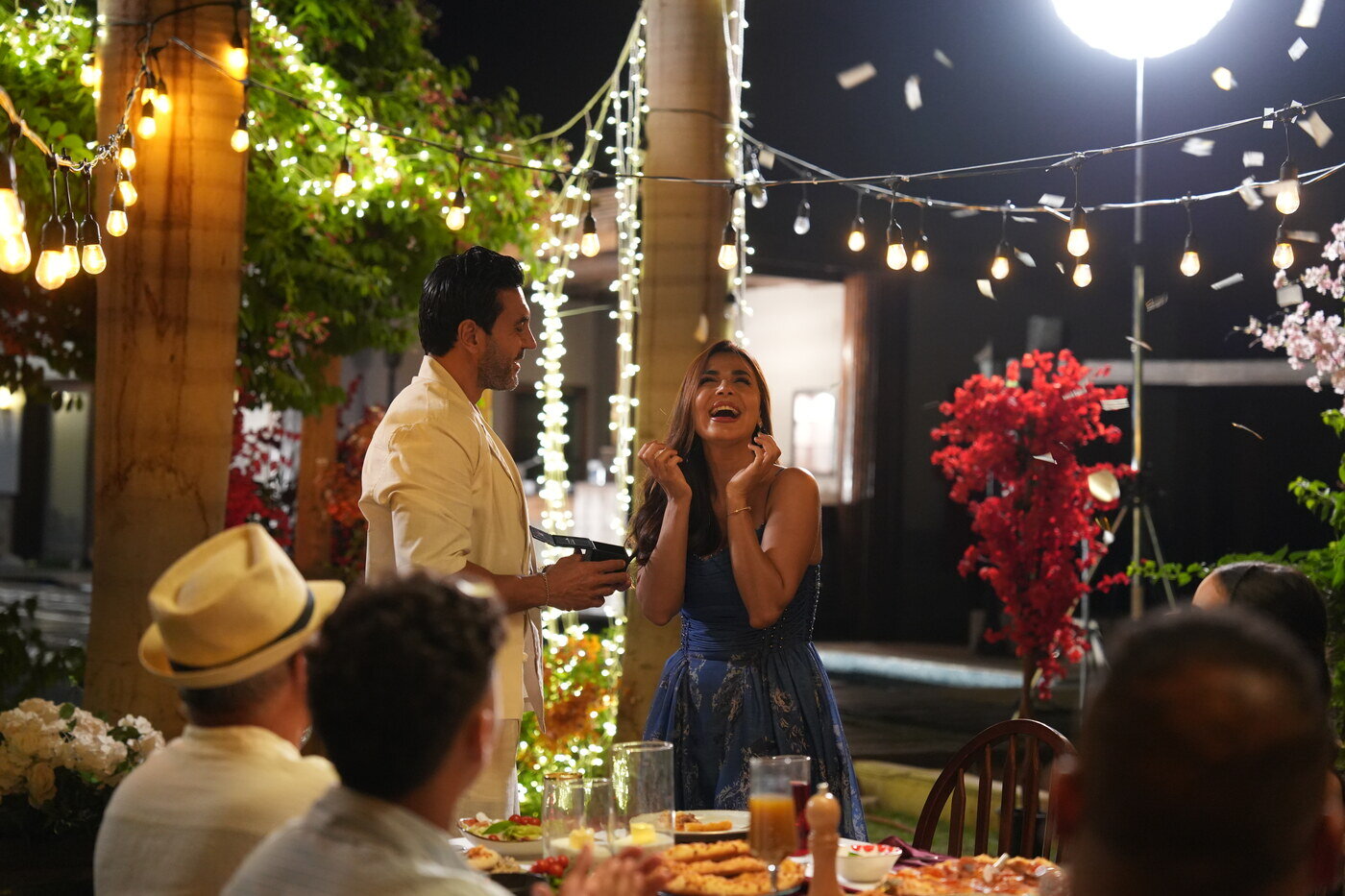
Strike Media handled the Lahza campaign end-to-end: creative development, song commissioning, casting, production design, shoot, and post-production. The music video presented a challenge that is easy to understate. Real estate, on screen, is almost always presented through the lens of real estate — the pan across the kitchen, the pull back through the living room, the child running through the garden. These images are not wrong, but they are architectural. They show the container, not the life inside it. The brief for Lahza’s music video was to invert that logic entirely: build scenes around emotion, not square footage.
This means the camera’s primary subject is never the compound. It is the moment between people — the pause, the glance, the reunion, the ordinary instant that accumulates into a life. The properties of Moment Community are present in the film, but they function as they would in the best visual storytelling: as the context that makes human experience possible, not as the subject in themselves. It is a subtler approach than the category norm, and a more demanding one. Every scene had to earn its emotional truth without the shortcut of spectacular architecture or the crutch of lifestyle abstraction.

Equally demanding was the question of Jassar’s presence within the film. There is a recurring failure mode in celebrity-fronted brand content — the artist appears, performs, and the viewer’s attention shifts entirely to the star, leaving the brand as a sponsor credit rather than a meaningful part of the experience. For Lahza, the integration had to feel natural: Jassar not as a spokesman, but as a presence woven into the film’s emotional fabric. His involvement had to feel like it arose from the project’s identity, not the other way around. The production choices — framing, location, interaction — were all made in service of that coherence. The song was released on August 4, 2026, across all major streaming and digital platforms, making it Wael Jassar’s first competitive summer release of the season and giving Moment Community an immediate cultural presence in one of the Arab music calendar’s most active windows.
Strike Media also produced a making-of documentary — content that traces the full journey from initial brief to final frame. This is not incidental material. It is an acknowledgment that in 2026, the process is part of the story. Audiences who are fluent in content culture are not only interested in what was made; they are interested in how, and why. The behind-the-scenes documentation extended the campaign’s reach and gave media, industry observers, and the Reflect Developments community a window into the creative rigour that produced the work.
The Night Itself
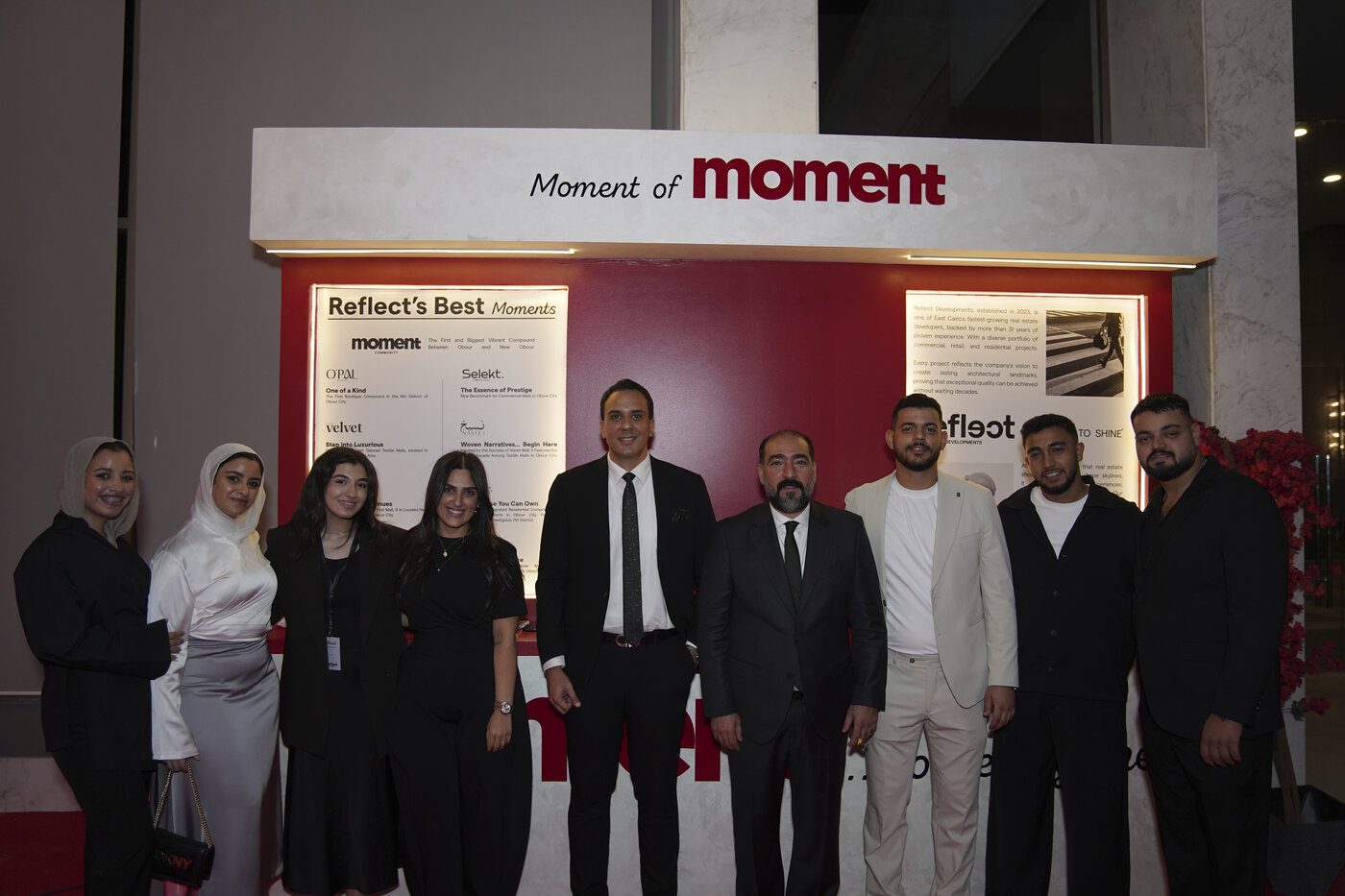
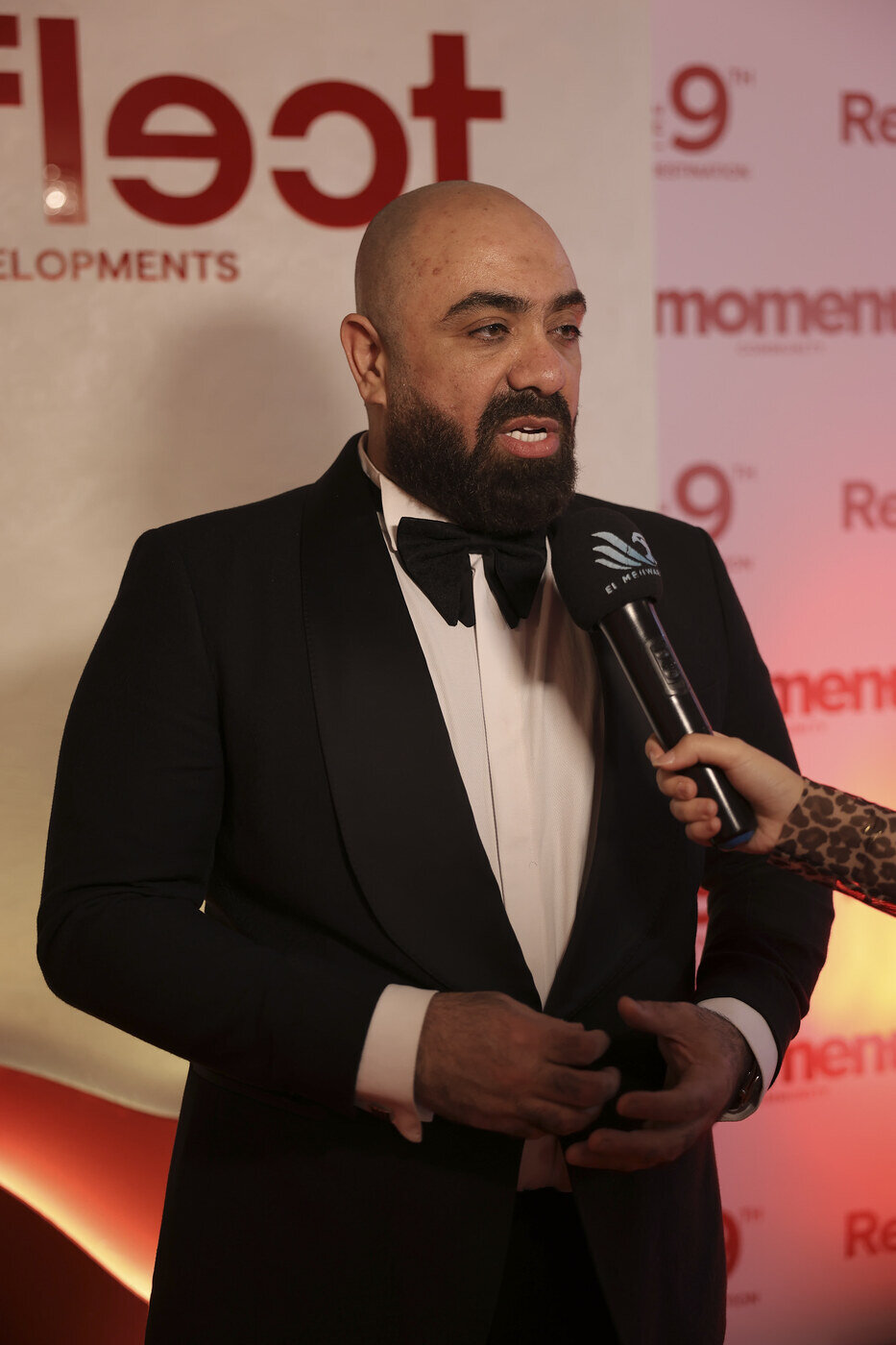
A song can travel everywhere. An event happens once, and once only — which is precisely where its power lies. The Moment Community launch event was designed as the physical realisation of the campaign’s central promise: making “moments that bring us together” tangible, embodied, present. Strike Media produced the event in full — stage architecture, lighting design, AV systems, live reveal sequence, artist coordination, and multi-camera documentation. The headline artist was Angham (أنغام), one of Egypt’s most celebrated and enduring voices, whose presence at the launch carried its own cultural weight.
The production challenge for a Mega Event launch of this kind is a particular balancing act. A stadium concert is spectacular but impersonal — the audience is a mass, not a community. A corporate dinner is intimate but airless — the product is always in the foreground, and the feeling of occasion can evaporate quickly. Moment Community’s launch needed to occupy a different register: premium and personal simultaneously. The production design was built to support that balance — scale that felt generous rather than overwhelming, lighting that shifted the room’s mood as the night moved through its sequences, a reveal that placed the audience inside a story rather than presenting them with a brochure.
Angham’s performance was the event’s emotional apex, but the evening was structured so that the performance was a culmination rather than a rescue — every element before it had already established the tone, and the music brought it to a point. The visual identity of the night aligned with and amplified the wider campaign: the palette, the language, the staging were all continuous with the world that Lahza had established on screen. When Angham performed, audiences were not encountering Moment Community for the first time. They had already heard what it felt like.
The Relationship
The Moment Community campaign did not emerge from a cold pitch. Reflect Developments and Strike Media had built their working relationship through the SELEKT launch — a compound launch headlined by Hamaki that had already demonstrated what was possible when a developer gave a creative agency genuine latitude. That earlier collaboration was the foundation of trust that made the Lahza campaign conceivable. Reflect Developments had experienced what it looked like when a real estate brief was treated as a cultural brief; they arrived at Moment Community already convinced that the approach could work.
This matters beyond the specific account. Sustained creative partnership between a developer and an agency is still relatively rare in Egypt’s property market. The industry moves quickly, briefs are often short, and the pressure of sales cycles tends to compress creative ambition. The Reflect Developments relationship represents a different model — one in which the developer’s brand has continuity across campaigns, in which each project builds on the creative equity of the last, and in which the agency functions as a genuine strategic partner rather than a production vendor. The results speak to what that model can produce.
What It Signals
Together, the Lahza music video and the Moment Community launch event did something that Egyptian real estate advertising rarely achieves: they made the project culturally present before the sales process began in earnest. In the vocabulary of brand building, this is the difference between awareness and desire — between knowing a thing exists and wanting to be part of it. Moment Community became one of Egypt’s most discussed compound launches of 2026 not because it outspent the competition, but because it gave people something to feel and something to remember.
The campaign’s logic is available to the broader market, and the question it poses to other developers is a simple one: what is your project’s emotional truth? Not its USP, not its payment plan, not its square-metre price in a specific phase — its emotional truth. What does it feel like to live there? What moments does it make possible? If a development team cannot answer that question with specificity and conviction, no amount of production value will manufacture the answer on their behalf. The answer has to precede the campaign.
What Lahza demonstrates — and what the Reflect Developments collaboration demonstrates more broadly — is that Egyptian real estate is entering a phase in which the most competitive asset a developer can own is not a location or a price point but a cultural identity. The buyers who will define the next decade of Egyptian residential growth are fluent in music, in content, in the grammar of cultural experience. They are not waiting to be convinced by a floor plan. They are waiting to feel something. The developers and agencies who understand that — and who have the creative infrastructure to act on it — are the ones who will define what the category looks like in the years ahead. Moment Community, with its song and its stage, its streaming numbers and its single unforgettable performance, is an early and persuasive answer to a question the industry is only beginning to properly ask.